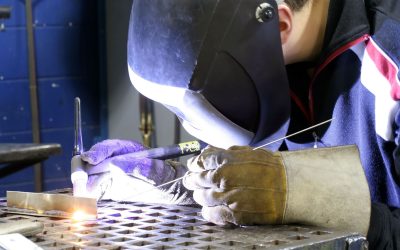
• Precision laser welding uses a focused light beam to join metals with minimal heat distortion, making it suited to small, delicate, or heat-sensitive parts.
• Common applications include medical device components, mold repair, firearm parts, and general industrial assemblies.
• Services covering this process are available through providers operating nationwide, including businesses based in the USA.
Precision laser welding is a joining process that uses a concentrated beam of light to fuse metal components with tight tolerances and limited heat spread. It is typically chosen over conventional arc welding when a part is small, thin, heat-sensitive, or requires a clean, low-distortion weld.
Manufacturers across medical, industrial, and firearm component sectors rely on Precision Laser Welding when a project calls for tight control over heat input and weld size. This matters most on parts where even slight warping or discoloration could cause a component to fail inspection or lose function.
How Precision Laser Welding Works
The process directs a narrow, high-energy beam onto the joint area, melting the base metals without the filler rod and open-arc exposure typical of TIG welding. Because the beam can be focused to a very small spot size, operators gain more control over where heat goes and how much of it the surrounding material absorbs.
Key characteristics of the process include:
• Minimal heat-affected zone, which reduces warping on thin or delicate parts
• High repeatability, useful for production runs with consistent specifications
• Compatibility with automation through CNC or robotic positioning systems
• Suitability for stainless steel, titanium, and other alloys common in medical and industrial parts
According to the American Welding Society, laser welding can produce welds that are comparable in strength to MIG welding, often with less spatter and distortion, which is one reason fabricators favor it for precision work. This makes it a practical alternative when a project’s tolerances or cosmetic requirements rule out standard arc processes.
Where Precision Laser Welding Is Used
The process shows up most often in industries where part failure carries high consequences or where components are too small for conventional welding equipment.
1. Medical device manufacturing – surgical instruments, implants, and diagnostic equipment often require welds on delicate, biocompatible materials under magnification.
2. Mold and die work – repairs and revisions to mold surfaces benefit from controlled, low-distortion welds that preserve tight dimensional tolerances.
3. Firearm component production – manufacturers producing regulated parts may require precision joining during prototype, R&D, or production stages.
4. General industrial fabrication – gas, oil, and other industrial sectors use the process on precision-machined components where heat control affects part performance.
Precision Laser Welding vs TIG Welding
Shops that perform precision joining work often choose between laser welding and TIG (tungsten inert gas) welding depending on part size, material, and production volume. The table below outlines general differences between the two approaches.
|
Factor |
Precision Laser Welding |
TIG Welding |
|
Heat input |
Very low, minimal distortion |
Low to moderate, adjustable amperage |
|
Best suited for |
Small, delicate, or heat-sensitive parts |
Wide range of part sizes, including larger components |
|
Automation |
Readily automated via CNC/robotics |
Can be automated for consistent results |
|
Typical use case |
Medical devices, miniature assemblies |
General industrial, mold build, firearm components |
Neither process is universally better. Material thickness, part geometry, and production volume typically determine which method a shop recommends for a given job.
Choosing a Provider for Precision Welding Work
Selecting a welding partner for precision work generally comes down to verifiable experience with the specific material and part type in question, not just general welding capability. Buyers evaluating a provider should ask about microscope-assisted welding setups, in-house quality inspection, and experience with the relevant industry, whether that is medical device components or firearm parts regulated under federal licensing.
Providers serving manufacturers across the USA may support single-part prototypes as well as higher-volume production runs, depending on their equipment and staffing. (Read more about precision laser welding)[https://www.microweldinc.com/tig-welding] outlines one example of how a welding provider structures its TIG and precision welding offerings for industrial clients.
Frequently Asked Questions
What makes precision laser welding different from standard welding? The process uses a focused light beam instead of an open arc, which concentrates heat into a smaller area and reduces the risk of warping on thin or delicate parts.
Can precision laser welding be automated? Yes. The process is commonly integrated into CNC or robotic systems for high-volume or high-precision production runs, according to industry welding resources.
Is precision laser welding suitable for small or miniature components? It is often preferred for miniature or intricate assemblies, including medical device parts, because the narrow beam allows for very small, controlled welds.
Does precision laser welding work on all metals? It works well on many common alloys, including stainless steel and titanium, though suitability depends on the specific material and part thickness involved.
Final Thoughts
Precision laser welding remains a practical option whenever a project demands tight heat control, repeatable results, and minimal distortion on small or sensitive components. Buyers comparing laser welding against TIG or other arc methods should weigh part size, material, and production volume before selecting a process or provider.
Published process details for Read more about precision laser welding are available for manufacturers reviewing welding options in the USA.