Summary first:
- Plantation blinds use wide horizontal slats, typically up to 2.5 inches, mounted above the window frame for light and privacy control.
- They cost less upfront than plantation shutters and install faster, making them a practical option for homes in Gilbert, AZ.
- Material choice (wood, faux wood, or vinyl) affects durability in desert heat and should guide the final decision.
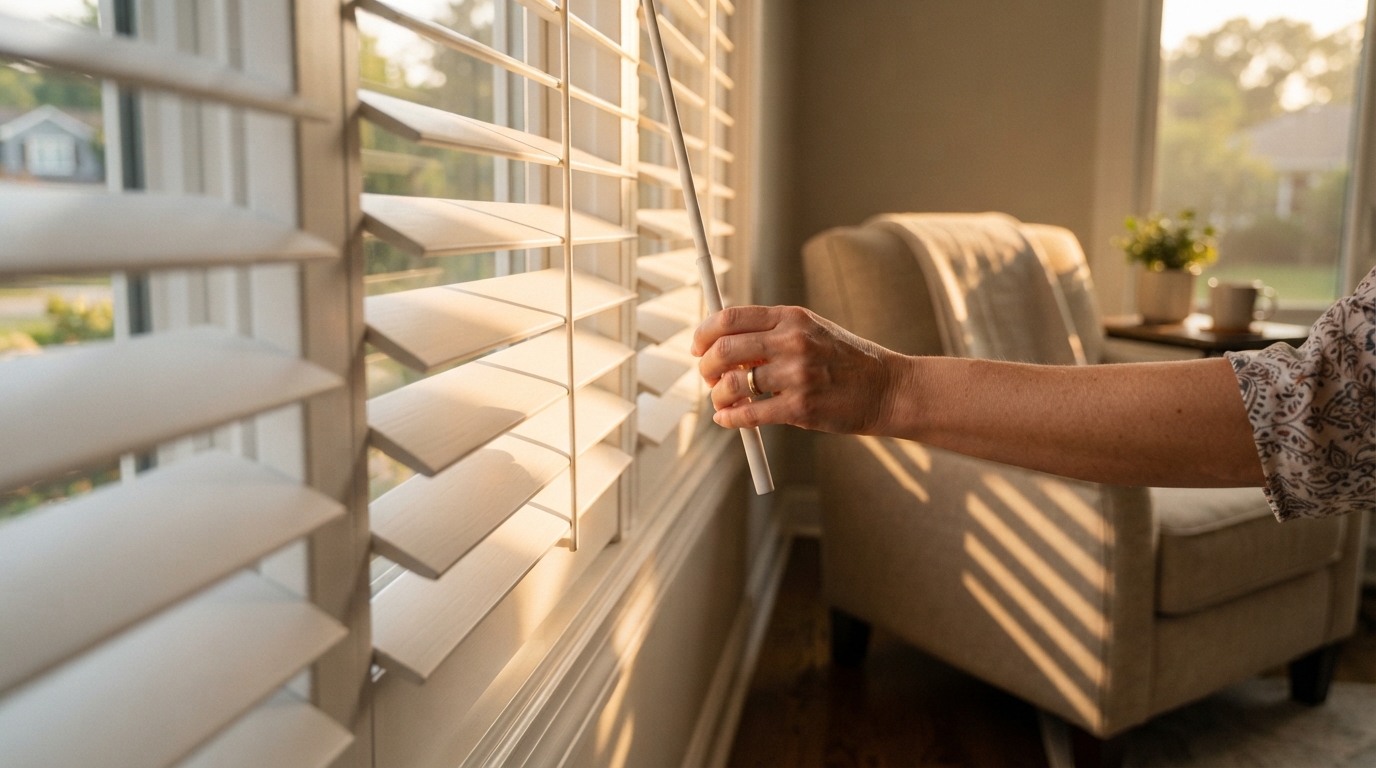
Plantation blinds are window coverings with oversized horizontal slats, generally between 2 and 2.5 inches wide, mounted at the top of a window rather than inside the frame. They offer broader light control than standard mini blinds while costing less and installing faster than full plantation shutters.
Homeowners comparing window treatments often confuse plantation blinds with plantation shutters, but the two products differ in structure, mounting, and price. Plantation blinds use individual movable slats on a cord or wand mechanism, while shutters are built as a solid framed panel permanently attached to the window casing. Understanding this distinction helps homeowners set realistic expectations for cost, maintenance, and long-term performance before making a purchase.
How Plantation Blinds Differ From Shutters
The core difference comes down to slat size and mounting method. Plantation blinds have wider slats than standard blinds, often as big as 2.5 inches, but their slats are narrower than plantation shutter louvers, which are as wide as 4.5 inches. Plantation blinds are mounted at the top of windows, while plantation shutters are mounted inside the window opening.
Other practical distinctions include:
- Operation: the majority of plantation blinds are controlled with a cord, but some have a cordless lift system.
- Structure: shutters are a solid, framed unit with wide louvers, while blinds are a collection of individual slats.
- Cost: blinds typically cost less upfront, making them a strong option for homeowners who want quality window treatments while staying within a tighter budget, and faux wood blinds offer durability and style at an accessible price point.
Comparing Plantation Blinds and Plantation Shutters
| Feature | Plantation Blinds | Plantation Shutters |
| Slat/Louver Width | Up to 2.5 inches | Up to 4.5 inches |
| Mounting | Above the window frame | Inside the window opening |
| Upfront Cost | Lower | Higher |
| Light Gaps | More light passes along edges | Tighter seal, fewer light gaps |
Blinds provide good light control, but typically allow more light to pass through between slats and along the edges than you find with plantation shutters. This gap matters in a desert climate where afternoon sun exposure is intense for much of the year.
Why Material and Climate Matter in Gilbert, AZ
Material selection affects how plantation blinds perform under sustained heat and UV exposure, conditions common throughout Gilbert, AZ. Faux wood and vinyl slats resist warping better than solid wood in homes with south- or west-facing windows that receive direct sun for several hours daily.
Energy performance is also a factor homeowners weigh when selecting window coverings. Window blinds, whether vertical or horizontal slat-type, are effective at reducing summer heat gain and reducing glare while providing good daylight indoors. According to the U.S. Department of Energy, most window coverings are operable, yet 75% of residential window coverings remain in the same position every day. Adjusting blinds throughout the day, rather than leaving them static, helps capture more of their potential heat-blocking benefit.
Practical considerations for Gilbert, AZ homes include:
- Window orientation: west-facing rooms benefit most from wider slats that fully close.
- Slat material: faux wood or vinyl holds up better than natural wood in low-humidity, high-heat conditions.
- Mounting style: outside-mount blinds can cover more glass area on larger windows common in newer Gilbert, AZ developments.
Choosing Between Blinds, Shutters, and Shades
Deciding on a window treatment ultimately depends on budget, desired permanence, and how much light gap is acceptable. Plantation shutters are ideal for a permanent, architectural solution with extensive customization and superior durability, while blinds offer flexibility, lower upfront cost, and a classic look that can easily adapt to changing styles. Homeowners replacing coverings on a tighter timeline or budget often start with blinds and consider shutters later as a long-term upgrade.
Frequently Asked Questions
Are plantation blinds the same as plantation shutters? No. Blinds hang from the inside or above the window recess, while plantation shutters attach to the window frame, creating a more sturdy structure and a sleeker appearance.
Do plantation blinds block heat effectively? Blinds can help cut heat gain by about 45 percent during summer months when fully closed. Performance varies by slat material and mounting fit.
Which costs less, plantation blinds or shutters? Plantation shutters are a much more expensive purchase than window blinds, making blinds the more budget-conscious option for most homeowners.
How long do plantation blinds typically last? Lifespan depends heavily on slat material and sun exposure; faux wood and vinyl options generally outlast natural wood in consistently hot, dry climates.
Business Information and Next Steps
Based in Tempe, AZ, Arizona Shutter Company serves customers across Gilbert, AZ with window treatment offerings that include blinds and shutters.
Readers evaluating window coverings for their homes can Schedule now to review published service details and consultation options.