Snapshot:
- Lyophilized peptide vials contain freeze-dried material that must be reconstituted with a diluent before use in research settings.
- Freeze-drying removes water from a peptide solution while preserving molecular structure, which extends shelf stability compared to liquid forms.
- Proper storage, reconstitution technique, and vial handling directly affect peptide integrity and research reproducibility.
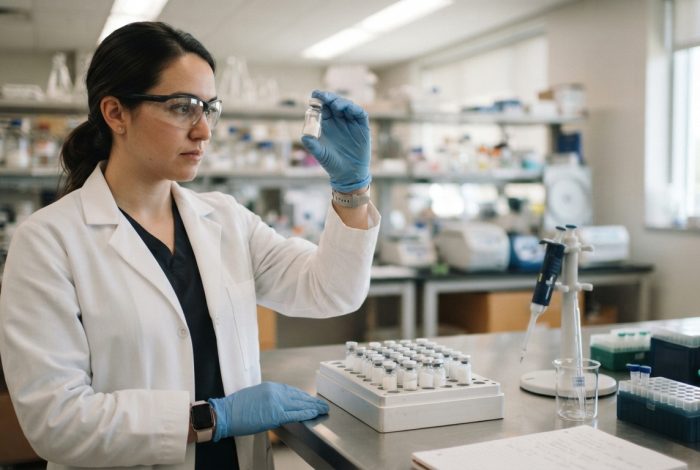
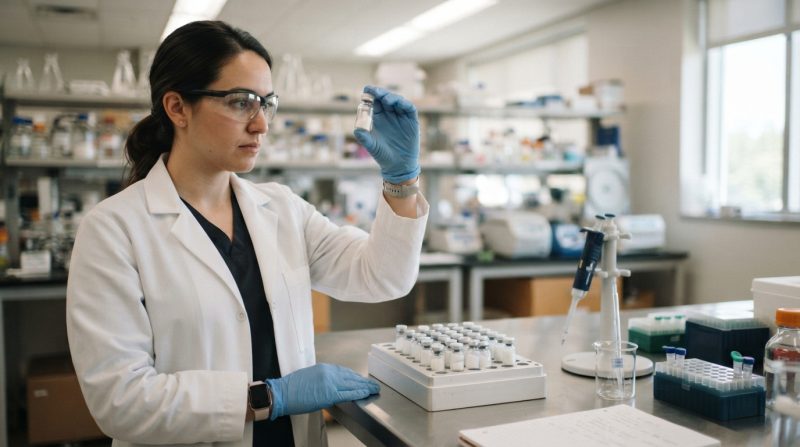
Lyophilized peptide vials hold freeze-dried peptide material that has been stabilized for storage and must be reconstituted before laboratory use. This format is common in research settings because it reduces degradation risks tied to moisture and temperature compared to liquid peptide storage.
Researchers working with peptide compounds in the USA often compare lyophilization against liquid-stored alternatives when planning sample storage and handling protocols. For those researching available formats, options to explore lyophilized formulations at DRYPtides LLC are organized by vial type on the supplier’s product listings. Reviewing how a vial is packaged, labeled, and sealed can help a lab determine whether it fits existing storage and handling workflows.
How Lyophilization Works and Why It Matters
Lyophilization, also called freeze-drying, removes water from a peptide solution through a controlled process of freezing followed by sublimation under vacuum. The process leaves behind a dry, stable cake or powder inside the vial rather than a liquid.
This matters for several practical reasons:
- Reduced hydrolysis risk: Without water present, peptide bonds are less prone to breakdown during storage.
- Extended shelf stability: Dry material generally tolerates a wider range of storage conditions than liquid solutions.
- Easier transport: Freeze-dried vials are lighter and less sensitive to temperature fluctuations during shipping than pre-dissolved solutions.
According to the National Institute of Standards and Technology, stable reference materials and consistent handling protocols are central to reliable measurement science, a principle that extends to how peptide samples are prepared and stored in research environments.
Reconstitution and Handling Basics
Reconstitution is the step where a diluent, typically bacteriostatic water or sterile water, is added back to the lyophilized cake to return the peptide to a usable liquid state. The process requires care to avoid damaging the peptide structure or introducing contamination.
Common handling steps include:
- Allowing the vial to reach room temperature before opening.
- Adding diluent slowly along the interior wall of the vial rather than directly onto the powder.
- Gently swirling the vial instead of shaking it vigorously.
- Inspecting the solution for clarity before use.
Mishandling at this stage, such as introducing excess agitation or using an incompatible diluent, can affect peptide solubility and research consistency.
Storage and Shelf Life Considerations
Storage conditions before and after reconstitution differ significantly, and understanding both stages helps labs plan appropriately.
| Storage Stage | Typical Condition | Key Consideration |
|---|---|---|
| Before reconstitution | Refrigerated or frozen, protected from light | Longer stability window when sealed |
| After reconstitution | Refrigerated, used within a limited timeframe | Stability window shortens once diluent is added |
| Transport | Cold chain packaging recommended | Minimizes temperature exposure during shipping |
Labs in the USA sourcing peptide vials for research purposes typically factor in both pre- and post-reconstitution storage windows when scheduling experiments, since delays after reconstitution can affect sample reliability.
Frequently Asked Questions
What does lyophilized mean for a peptide vial? It means the peptide has been freeze-dried into a powder or cake form inside the vial, removing water content to improve stability during storage before reconstitution.
How long can a lyophilized peptide vial be stored before use? Storage duration depends on the specific peptide, vial sealing, and storage temperature, so researchers should follow the documentation provided with each product rather than assume a universal timeframe.
Does reconstitution need to happen immediately after opening a vial? Reconstitution is typically performed shortly before use, since once diluent is added the stability window becomes shorter than the sealed, freeze-dried state.
Are all lyophilized peptide vials reconstituted the same way? General steps are similar, but diluent type, volume, and handling technique can vary by peptide, so product-specific instructions should guide the process.
Vial Sourcing and Research Use
Current product listings for lyophilized vials are maintained by DRYPtides LLC, reflecting available formats for research applications. A current listing of lyophilized vial options is published by DRYPtides LLC for review by research laboratories.