• Septic tank pumping removes accumulated sludge and scum from a holding tank, usually every three to five years depending on household size and tank capacity.
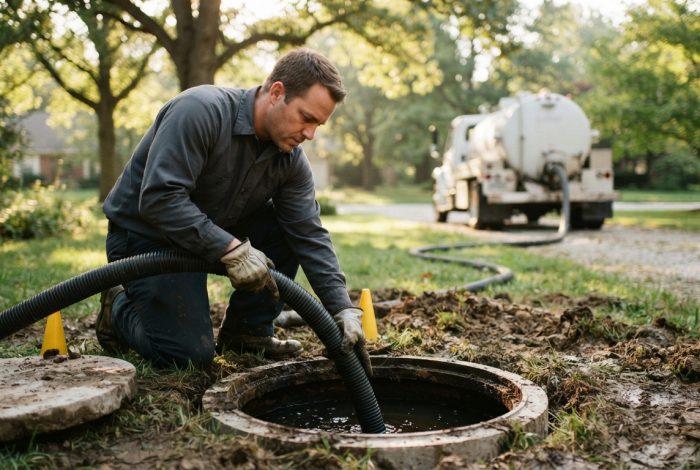
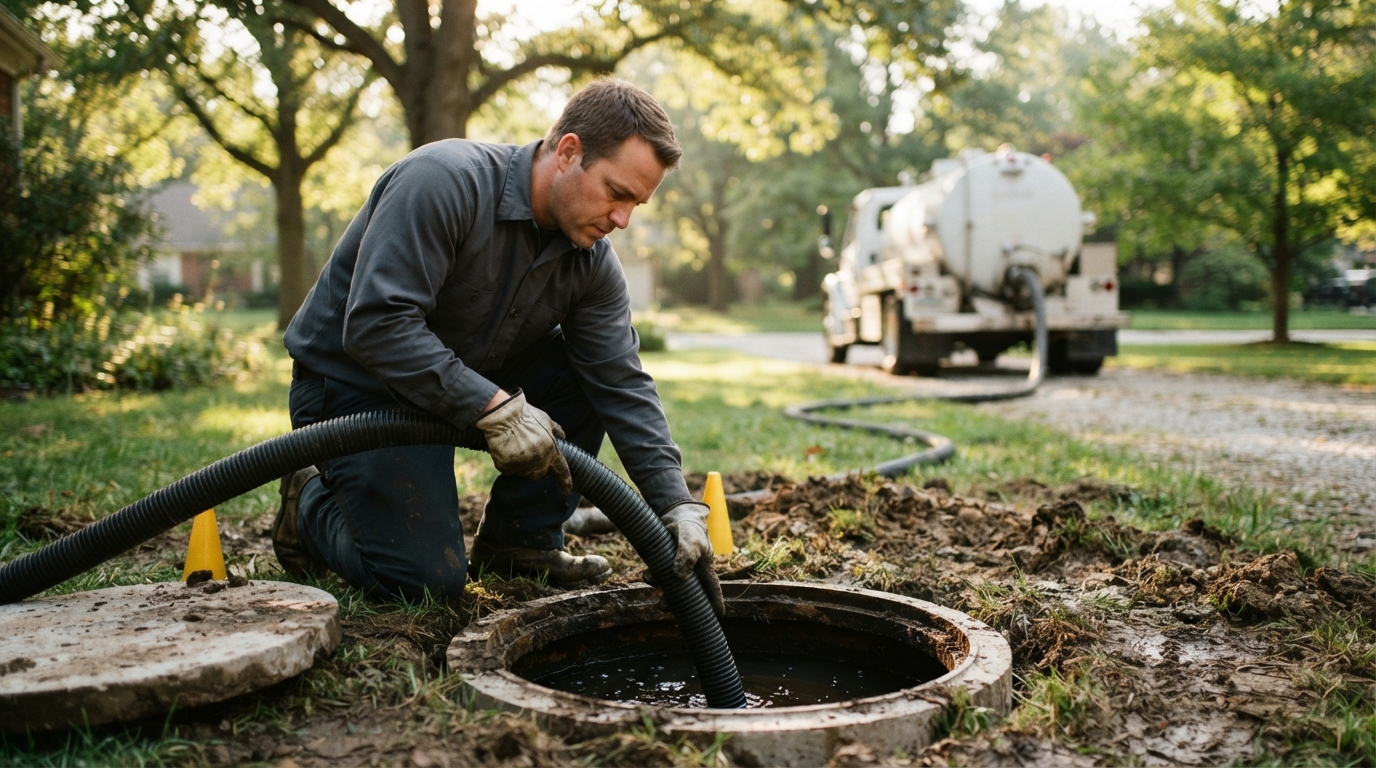
• The service involves locating the tank, opening the access point, vacuuming out solids and liquids, and checking tank condition.
• Skipping routine pumping raises the risk of backups, drainfield damage, and costly repairs for homes in Passaic County, NJ.
A septic tank holds wastewater long enough for solids to settle and scum to rise, and pumping clears out that accumulated material before it overflows into the drainfield. Most households need this service every three to five years, though the exact timing depends on tank size, occupancy, and water use.
Septic Tank Pumping is a maintenance task that keeps a home’s wastewater system functioning as designed rather than failing under pressure. Older homes with smaller tanks or larger households often need service on the shorter end of that range, since more people generate more wastewater and solids build up faster.
Step-by-Step: What Technicians Do During a Pumping Visit
A pumping appointment follows a fairly consistent sequence, regardless of tank size or property type.
1. Locate and uncover the tank. Technicians find the access lid, which may require digging if it is buried below grade.
2. Inspect the tank condition. Before pumping, a technician checks for cracks, corrosion, or signs of a failing baffle.
3. Vacuum out solids and liquids. A vacuum truck removes sludge, scum, and effluent through a hose connected to the tank.
4. Rinse and recheck. The tank interior gets a visual once-over to confirm it was emptied completely and nothing unusual remains.
5. Document sludge and scum levels. Keeping a record of these readings helps establish a realistic pumping schedule going forward.
This process typically takes under an hour for a standard residential tank, though access difficulties or deep burial can extend the visit.
Why Regular Pumping Matters for Passaic County Homes
Septic systems in Passaic County, NJ serve a mix of older homes and newer construction, many on lots where soil conditions and seasonal groundwater affect how well a drainfield absorbs liquid. Neglecting pumping does not just risk a messy backup; it shortens the life of the entire system.
• Solids reaching the drainfield can clog the soil absorption area, an expensive component to repair or replace.
• Backups into the home often happen without warning once a tank is full past capacity.
• Odors and slow drains are early symptoms that a tank is nearing its limit.
• Reduced resale value can result from a septic system with no documented maintenance history.
The U.S. EPA notes that the average household septic system should be inspected at least every three years by a septic service professional, and that four major factors influence the frequency of septic pumping, including tank size, household size, wastewater volume, and solids entering the system. Homeowners who track sludge and scum readings over multiple visits get a far more accurate pumping interval than relying on the generic three-to-five-year rule alone, since the EPA’s septic system guidance is intended as a starting baseline rather than a fixed schedule.
Pumping Intervals by Household Size
Tank size and occupancy are the two biggest variables in determining how often pumping is needed. The table below offers general reference points for a common 1,000-gallon tank.
|
Household Size |
Tank Size |
Typical Pumping Interval |
|
1-2 people |
1,000 gallons |
Approximately 4-5 years |
|
3-4 people |
1,000 gallons |
Approximately 2-3 years |
|
5-6 people |
1,000 gallons |
Approximately 1.5-2 years |
These figures are general estimates. A professional inspection remains the most reliable way to confirm when a specific tank needs service, since usage patterns, garbage disposal use, and soil conditions all affect the timeline.
Frequently Asked Questions
How do I know my septic tank needs pumping? Slow drains, gurgling pipes, sewage odors near the tank or drainfield, and standing water in the yard are common warning signs that a tank is nearing capacity.
Can I pump my own septic tank? Septic pumping requires specialized vacuum equipment and proper waste disposal, so it is handled by licensed septic service professionals rather than as a DIY project.
Does pumping fix a failing drainfield? No. Pumping removes solids from the tank itself, but a saturated or damaged drainfield requires separate diagnosis and, in some cases, replacement.
What happens if a septic tank is never pumped? Solids eventually overflow into the drainfield, which can cause permanent clogging, backups into the home, and a system failure that costs significantly more to repair than routine pumping.
Business Info
Based in Totowa, NJ, AAA Advanced Plumbing & Drain Cleaning, Inc. serves customers throughout Passaic County, NJ.
Current service area information for AAA Advanced Plumbing & Drain Cleaning, Inc. is published for the local service region, and additional listings appear at AAA Advanced Plumbing & Drain Cleaning, Inc.