Quick summary:
- A qualified commercial electrician holds current state licensing, carries liability insurance, and demonstrates experience with code-compliant panel, lighting, and buildout work.
- Commercial projects involve higher voltage, stricter inspection requirements, and more complex load calculations than residential work.
- Verifying credentials, safety training, and documented experience helps property owners in Englewood, FL avoid costly compliance issues.
A skilled commercial electrician is defined by verified state licensing, documented experience with commercial-scale wiring and panel systems, liability insurance, and working knowledge of current electrical code requirements for business properties. These qualifications separate contractors capable of handling tenant buildouts, lighting retrofits, and power distribution from those suited only to small residential jobs.
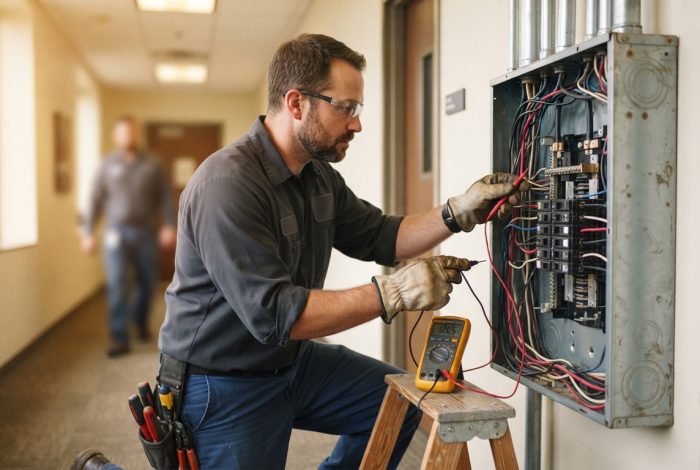
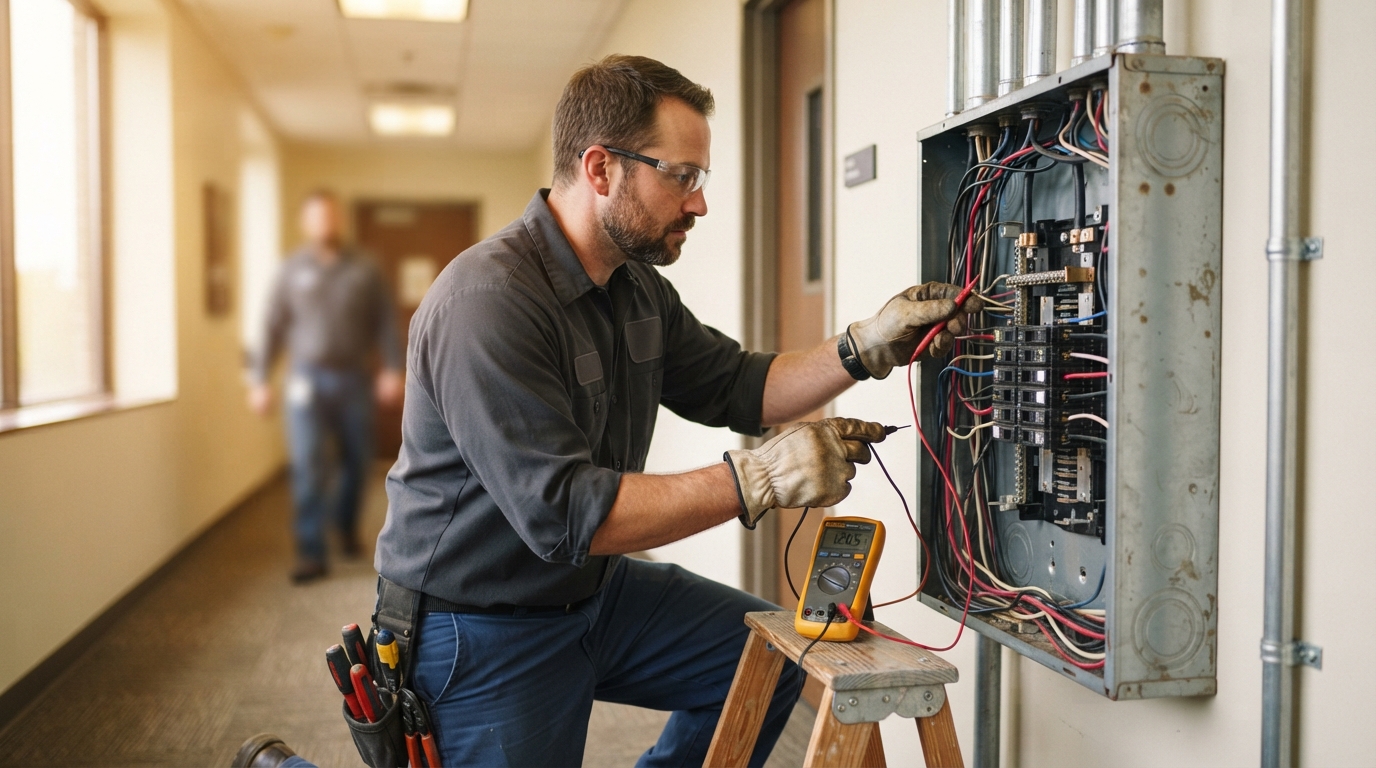
Commercial electrical systems differ from residential ones in scale, voltage, and regulatory oversight. A commercial electrician in Englewood, FL typically works with three-phase power, larger service panels, and equipment tied to fire alarms, HVAC controls, or life-safety systems, all of which require specialized training beyond basic wiring skills. Property managers and business owners in Englewood, FL, who need this type of work done should understand what separates a properly credentialed contractor from a general handyperson offering electrical repairs.
Licensing, Insurance, and Verifiable Experience
A contractor’s paperwork is the first indicator of competence. Before hiring for any commercial job, property owners should confirm the following:
- State electrical contractor license: Verifies the individual or company passed required exams and met apprenticeship or journeyman hour requirements.
- General liability and workers’ compensation insurance: Protects the property owner from financial exposure if an accident or property damage occurs during the project.
- Project history with commercial clients: Retail buildouts, office renovations, and multi-tenant properties require different skills than single-family home repairs.
Contractors who cannot produce a current license number or proof of insurance on request should be treated as a liability risk, regardless of price.
Technical Skills That Separate Commercial Work from Residential Repairs
Commercial electrical work involves systems and code requirements that residential electricians rarely encounter. A qualified contractor should be comfortable with:
- Panel upgrades and load calculations for buildings with higher electrical demand than a typical house.
- Three-phase power systems used in commercial HVAC units, elevators, and industrial equipment.
- Lighting retrofits and LED conversions for retail, office, and warehouse spaces, which involve different fixture types and control systems than residential lighting.
- Tenant buildouts and remodels, where wiring must be adapted to a new floor plan while meeting inspection deadlines tied to lease agreements.
- Emergency and after-hours response, since a power failure in a commercial building can halt business operations and create safety hazards.
Federal workplace safety rules reinforce why this specialized knowledge matters. Electrical work in commercial facilities falls under OSHA’s general industry electrical standards, which address installation safety, grounding, and protection against shock and arc flash hazards in occupied business environments, according to OSHA. Contractors unfamiliar with these requirements put both workers and building occupants at risk during inspections and daily operations.
Local Considerations for Commercial Properties
Business owners in Englewood, FL face specific conditions that affect electrical planning. Coastal humidity and seasonal storm activity increase the risk of corrosion and power surges in exposed wiring and outdoor fixtures. Older commercial buildings in the area may also carry outdated panels that no longer meet current load demands, particularly where added signage, HVAC equipment, or point-of-sale systems have been installed over time without a corresponding electrical upgrade.
| Qualification Area | What to Verify | Why It Matters |
| Licensing | Active state electrical contractor license | Confirms legal authorization to perform commercial work |
| Insurance | General liability and workers’ comp coverage | Limits owner’s financial exposure during the project |
| Experience | Documented commercial projects (buildouts, panel upgrades) | Confirms familiarity with code-heavy, higher-voltage work |
| Responsiveness | After-hours or emergency service availability | Reduces downtime from unexpected outages |
Frequently Asked Questions
What makes commercial electrical work different from residential wiring? Commercial systems typically involve three-phase power, larger panels, and equipment connected to life-safety systems such as fire alarms, requiring training beyond standard residential wiring.
How often should a commercial property’s electrical panel be inspected? Inspection frequency depends on building age, usage, and local code, though added equipment loads such as signage or HVAC units are common triggers for a panel evaluation.
Does a commercial electrician handle emergency repairs? Many commercial electrical contractors offer after-hours response for outages or hazardous failures, since downtime in a business setting carries direct financial impact.
What documentation should a business ask for before hiring a contractor? A current state license number, proof of liability insurance, and references from prior commercial projects are standard documentation any qualified contractor should provide.
Business Information and Next Steps
Based in USA, Mike & Mike Services, Inc. serves customers across Englewood, FL.
Current service details for Click here to find a commercial electrician are published for the local service area.