Once upon a time, people lived in relative isolation from each other and contact between different groups involved walking from one place to another. Since roads and marked out routes did not exist back then, this was often a hazardous, hit and miss undertaking and was only attempted for the most pressing of reasons. This situation existed for a very long time; even in the more remote western regions of the US.
Then Came The Railroads
These enabled people and goods to be transported with relative ease from one place to another. The advent of the automobile did not have such a far reaching effect until the “powers that be” decided to invest in a system of paved roads connecting one town to most other towns and cities throughout the nation.
People were now truly mobile. This, in turn led to different concepts in auto manufacture; from cars, to buses, to trucks and even to specialist companies setting up as Emergency Vehicle Manufacturers.
Emergency Vehicles
Possibly the first emergency vehicle to be manufactured was the hand drawn fire tender which enabled the townsfolk to transport water to the scene of a fire rather than relying on a long line (or chain) of people passing along buckets. To get to the fire quicker, they arranged for it to be drawn along by a draft animal (usually a horse). Then, to get there even faster, they started adapting automobiles to become a fire trucks.
The idea was a good one and was followed by adaptation of vehicles to transport the sick and injured – i.e. the first motorized ambulances. As the total number of motor vehicles on the roads grew; so did the numbers for accidents and breakdowns; another market for the Emergency Vehicle Manufacturers – breakdown trucks.
These are examples of vehicles that have been heavily adapted, other emergency vehicles such as police cars are not all that different from the basic automobile they started out as. However, if you start adding something major, say a water cannon to control rioting protestors, then, you have made a serious modification to make the vehicle serve a specific function in an emergency.
In a way, most of the vehicles used by the armed forces could be said to have come from the plants and factories of the Emergency Vehicle Manufacturers. After all, they have wheels attached to a chassis with an engine, transmission and steering. Something is then added on top to allows the military to perform emergency functions.
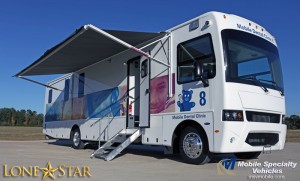
Some emergency vehicle manufacturers are divisions within a major auto company. Others like Mobile Specialty Vehicles, Inc. start with a standard base and then modify it to whatever configuration is necessary for it to perform your required function. You can check their abilities on their website.
