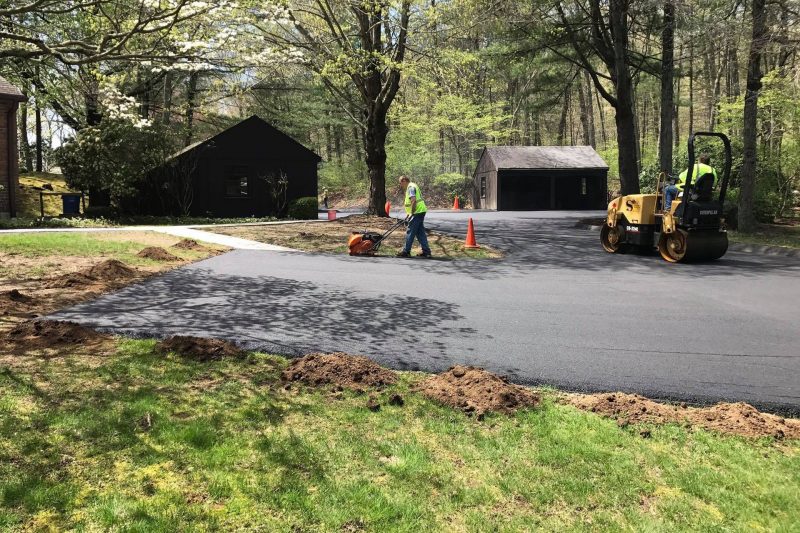
A freshly sealcoated parking lot may look ready for vehicles before the coating has developed sufficient strength to withstand traffic. The surface may appear uniform and dry, but reopening too early can lead to tire tracking, scuff marks, or damage that affects the finished treatment.
For commercial property managers, the reopening schedule is often just as important as the maintenance work itself. Shopping centers, medical offices, warehouses, and business complexes depend on their parking areas to accommodate customers, employees, deliveries, and service vehicles.
In Phoenix, AZ, scheduling decisions also involve local weather conditions, including intense summer heat, direct sunlight, and seasonal humidity.
Understanding how asphalt coatings dry, what affects their curing requirements, and when traffic can safely return helps property managers make informed decisions without relying on assumptions.
How Long Does Asphalt Sealcoating Take to Cure?
Many conventional parking lot sealcoating products require approximately 24 hours after the final application before normal vehicle traffic can resume under suitable conditions.
For example, pavement sealer manufacturer SealMaster recommends allowing 24 hours after the final coat before reopening a treated surface to vehicles.
However, this is a product-specific guideline rather than a universal rule.
Some treatments have different curing characteristics, and certain conditions may require additional time.
The reopening period depends on the coating formulation, application thickness, number of coats, weather, and anticipated traffic.
Property managers should therefore obtain specific instructions for the treatment being installed.
A parking lot should not reopen simply because a predetermined number of hours has passed. The coating must meet the relevant manufacturer’s requirements and be released for use by the responsible project personnel.
What Is the Difference Between Drying and Curing?
Drying and curing are closely related, but they do not always describe the same stage of coating development.
A surface may become dry to the touch while the applied material continues developing the properties needed to withstand vehicle traffic.
Many water-based asphalt sealcoating products rely on water leaving the coating as the material forms a continuous protective film.
Curing involves the coating reaching an appropriate condition for its intended use.
For property managers, this distinction explains why a surface that no longer looks wet may still require access restrictions.
The manufacturer may specify different waiting periods for subsequent coating applications, pedestrian access, and vehicle traffic.
These requirements should be treated separately.
Allowing a person to walk across a treated surface does not automatically mean it is ready for automobiles, delivery trucks, or equipment.
How Does Phoenix Weather Affect Reopening Times?
Phoenix generally experiences abundant sunshine and warm temperatures, but favorable drying conditions cannot be assumed throughout the year.
Weather affects how moisture leaves a coating and how the treatment develops its intended properties.
High Temperatures
Warm temperatures can support drying for certain water-based coatings, provided the conditions remain within the manufacturer’s application limits.
However, extreme heat does not guarantee that the entire coating has cured evenly.
Surface temperature, coating thickness, sunlight exposure, and product formulation still matter.
Excessively hot pavement may also create application challenges for some materials.
Humidity
Humidity influences how quickly moisture evaporates.
When surrounding air contains more moisture, water-based coatings may dry more slowly.
This becomes particularly relevant during Phoenix’s summer monsoon season, when humidity can increase and thunderstorms may develop.
Rainfall
Rain before a coating has adequately dried or cured can interfere with the treatment.
Depending on the product and its stage of development, moisture exposure may affect appearance, adhesion, or surface integrity.
A project scheduled during a period of uncertain weather may require adjustments.
Shaded Areas
Covered parking areas, buildings, landscaping, and other structures can reduce direct sunlight and create different drying conditions across the same property.
An exposed section may appear ready before a nearby shaded section.
Reopening decisions should account for these differences rather than assume every part of the lot develops at the same rate.
Does the Type of Asphalt Coating Change the Schedule?
Yes. Different pavement preservation treatments have different material properties and reopening requirements.
Conventional asphalt sealcoating, slurry seal, microsurfacing, and specialty reflective coatings should not be treated as identical applications.
For example, slurry seal contains a mixture of asphalt emulsion, aggregate, water, and other specified materials. Microsurfacing uses a specialized formulation designed to develop cohesion through controlled chemical and physical processes.
These differences can affect when a treated surface becomes suitable for traffic.
The Federal Highway Administration’s pavement maintenance guidance recognizes that curing requirements vary among pavement preservation treatments.
Some materials may support relatively rapid reopening under suitable conditions, while others require longer restrictions.
Property managers should confirm the exact treatment rather than request a general estimate for seal coating asphalt.
This is particularly important when comparing proposals that use different preservation methods.
Why Do Multiple Coats Affect Reopening?
Some sealcoating systems require more than one application.
Depending on the product and project specifications, each coat may need to reach a suitable condition before the next layer is applied.
The final reopening period is generally determined in relation to the completed coating system rather than the beginning of the first application.
For example, a maintenance project involving two coats may include separate preparation, application, intermediate drying, and final curing stages.
These activities contribute to the overall closure schedule.
The thickness of each application also matters.
Excessive material thickness can interfere with drying and curing, which is why manufacturers establish application rates and procedures.
Applying more coating does not necessarily improve performance.
An appropriate installation follows the specified material quantities, surface preparation requirements, and environmental limits.
Can Passenger Vehicles Return Before Delivery Trucks?
Different vehicle types place different demands on newly treated pavement.
Passenger cars, delivery vans, refuse trucks, and heavy commercial vehicles vary in weight, tire loading, and turning behavior.
A surface that is suitable for ordinary passenger vehicles may still require restrictions on heavier traffic, depending on the coating system.
Commercial loading areas deserve particular attention because trucks may stop for extended periods or make tight turning movements.
These activities place concentrated stresses on the surface.
Even after a coating is considered ready for general traffic, some products may remain susceptible to visible tire marks during their early service period.
Property managers should clarify whether reopening approval includes all anticipated vehicle types.
They should also ask whether temporary restrictions on heavy vehicles, sharp turns, or stationary equipment are recommended.
What Happens if a Parking Lot Reopens Too Soon?
Premature traffic can affect the appearance and performance of a newly applied coating.
Possible consequences include:
- Coating transfer onto vehicle tires
- Scuffing caused by turning movements
- Uneven marks in frequently traveled areas
- Localized coating disturbance
- Reduced uniformity of the finished surface
The severity depends on the coating’s condition, material characteristics, and traffic demands.
Not every visible tire mark indicates structural pavement damage.
However, repeated traffic before the coating has developed sufficient integrity can interfere with the intended result.
Property managers should avoid removing barriers simply because the surface appears dry.
If vehicles enter an area before it is released, the responsible contractor should be informed so the affected section can be assessed.
How Does Parking Lot Striping Affect Reopening?
Sealcoating is often coordinated with pavement marking work.
Parking stalls, directional arrows, loading zones, and other markings may need to be reapplied after the surface treatment.
This introduces another consideration into the reopening schedule.
The coating must reach the condition required before compatible traffic-marking materials can be applied.
After striping, the marking material may require its own drying or curing period before traffic can resume.
The American Sealcoat Manufacturers Association’s sealcoat specification addresses applying traffic markings after the coating has thoroughly dried.
For commercial properties, this means that completing the surface coating does not necessarily mark the end of all work.
The final traffic reopening schedule should account for any additional pavement markings, their material requirements, and the need to keep vehicles away from unfinished work.
Should Reopening Be Planned Before Sealcoating Begins?
Yes. The reopening discussion should take place during project planning rather than after the coating has been applied.
For commercial properties considering Commercial asphalt sealcoating, understanding the anticipated closure period helps property managers coordinate parking availability with daily business needs.
A practical plan identifies the expected application schedule, affected parking sections, access restrictions, and the conditions required for reopening.
Property managers should also determine who will communicate changes if curing takes longer than expected.
An anticipated reopening time should not be treated as a guarantee.
Unexpected weather, product requirements, or additional work may affect the schedule.
Clear communication allows tenants and visitors to prepare without assuming that every parking space will become available at a fixed hour.
What About Properties That Cannot Close Entirely?
Some commercial facilities operate continuously or have limited alternative parking.
Hospitals, residential communities, hospitality properties, and distribution centers may need ongoing access even while pavement maintenance is underway.
In these situations, completing parking lot sealcoating in separate sections may be worth evaluating.
However, the decision depends on property layout, available entrances, safe circulation routes, and the construction requirements.
A phased approach should not compromise required emergency access or direct pedestrians and vehicles into active work areas.
Property managers should also consider the access demands of occupants with disabilities.
Accessible parking spaces and routes require particular attention when temporary restrictions are introduced.
Where suitable alternative access cannot be maintained, a different scheduling arrangement may be necessary.
The objective is to establish an operational plan consistent with the property’s limitations and the pavement treatment’s technical requirements.
What Should Be Checked Before Removing Barriers?
Reopening should follow a deliberate review rather than an assumption based on surface appearance.
Relevant considerations include:
- Product requirements: Have the manufacturer’s minimum curing and traffic-release conditions been satisfied?
- Surface condition: Is the coating adequately dry and cured for its intended use?
- Weather exposure: Has unexpected rainfall, humidity, or another environmental condition affected the work?
- Additional applications: Are all specified coating layers complete?
- Pavement markings: Have necessary markings been applied and cleared for traffic?
- Vehicle restrictions: Are separate limitations required for heavier traffic or equipment?
- Work-zone removal: Can temporary barriers and access controls be removed appropriately?
These questions support a more reliable decision-making process.
Final reopening authorization should come from the responsible contractor or other designated project authority, consistent with the approved work requirements.
Does Sealcoating Mean the Pavement Is Fully Repaired?
No. Sealcoating is a surface preservation treatment, not a replacement for structural asphalt repairs.
A parking lot may be ready to reopen after coating even though its long-term performance still depends on the condition of the underlying pavement.
Sealcoating does not correct unstable subgrade materials, substantial depressions, widespread structural cracking, or failed pavement sections.
Those conditions may require repairs before surface preservation is appropriate.
For this reason, commercial asphalt maintenance should consider pavement condition before selecting a coating.
A property with isolated surface wear may be a suitable candidate, while one with substantial structural distress may need a different treatment.
The appearance of a fresh coating should not be confused with a complete structural rehabilitation.
How Can Property Managers Protect the Finished Surface?
Once a parking lot has reopened, appropriate use during the early service period remains important.
Property managers should follow any additional instructions regarding heavy equipment, sharp turning movements, or concentrated loads.
Drivers who turn their steering wheels while stationary can place lateral stresses on the coating, potentially creating visible marks when the treatment is still relatively new.
Waste containers, trailers, and other heavy equipment may also introduce concentrated loads.
If the coating manufacturer or responsible contractor specifies temporary restrictions, these should be communicated to maintenance personnel and property occupants.
Routine observation after reopening can help identify unusual coating disturbance or areas needing further evaluation.
These precautions do not replace proper application and curing, but they can support the intended performance of the finished treatment.
Making Informed Reopening Decisions After Sealcoating
The appropriate reopening time for a commercial parking lot depends on more than when the last coat was applied.
Material formulation, weather, application thickness, traffic demands, pavement markings, and site conditions all contribute to the decision.
Although many conventional sealcoating products specify approximately 24 hours before vehicle traffic under suitable conditions, that figure should not replace project-specific requirements.
For Phoenix commercial properties, seasonal heat, sun exposure, and changing humidity make it especially important to follow the applicable product instructions.
Planning the closure, communicating with occupants, and confirming that the finished surface is ready for its intended traffic can help reduce avoidable maintenance problems.
A thoughtful reopening process is an important part of pavement preservation because it allows the completed treatment to develop the condition required before normal parking lot operations resume.
About ALK Asphalt LLC
Commercial pavement restoration and preservation are central to the work of ALK Asphalt LLC, a Peoria-based contractor serving the Phoenix metropolitan area. The locally and family-owned company provides seal coating, crack sealing, milling, asphalt repairs, and related paving services, and reports being licensed and insured with current City of Phoenix Small Business Enterprise certification. For project questions, their office can be contacted at (602) 218-4997, or property managers can find their office on Google Maps.