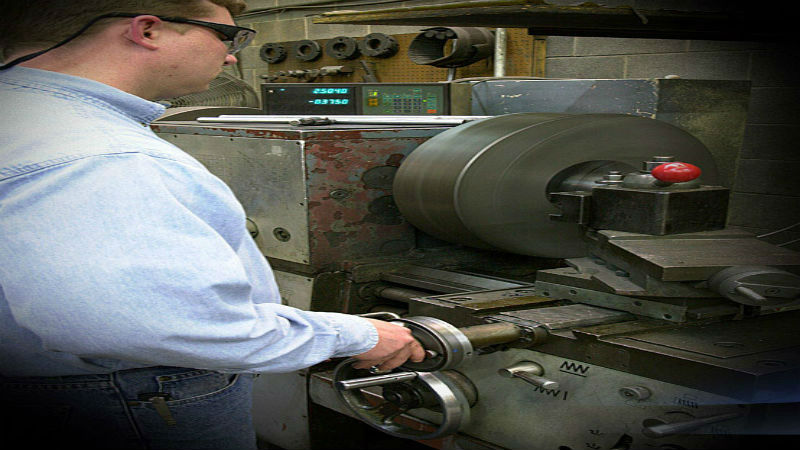
Hydraulic cylinders have many different uses in different industries. A hydraulic cylinder is made up of many different parts including the barrel, the base or cap, the piston, the cylinder head, and more. Each part in a hydraulic cylinder will need to be in very good condition to withstand the pressures commonly placed on them.
Hydraulic cylinders are considered to be unidirectional machines in that they can apply force in a straight line with a unidirectional stroke. This is very useful when you are trying to raise or lower something and need the pressure of hydraulics to help. You can see hydraulic cylinders in heavy equipment such as cranes, presses, and excavators as well as on every day uses such as cars. A hydraulic cylinder works by having pressurized hydraulic fluid forced into the cylinder by the hydraulic pump. This hydraulic fluid displaces the piston, pushing it out. Since the hydraulic fluid is pressurized it can use the piston to push very heavy loads, such as the arms of a crane, into new positions. In many different kinds of construction equipment, like cranes and digging tools, the extending pistons act as types of muscles moving the joints of the equipment.
Without hydraulic cylinders , it is very likely that there would be fewer large buildings, fewer large scale farms, and even fewer asphalt roads and concrete structures. This is because hydraulic cylinders are crucial parts of much of the equipment used to make these things. Hydraulic cylinders can be found in many different industries such as construction, fire and rescue, airlines and aircraft, and many more. You can even sometimes have custom hydraulics cyclinders made for specific purposes, both industrial and private.
Since hydraulic cylinders have to operate under stress and can cause serious injury or damage when they break, the individual parts of a hydraulic cylinder need to be manufactured well and replaced at times. It is usually safer to replace the whole cylinder at once when one part wears out so that you can be sure that it is in proper working order. You can also find professional hydraulic equipment repair shops who can repair your unit properly before you put any further pressure on it. The pressure which a hydraulic cylinder is subject to comes both from the internal pressure of the hydraulic fluid, but also from the external pressure of the load being moved.
The pieces to hydraulic cylinders will either be welded, screwed, or flanged into place, depending on the part in question and the manufacturer’s preferences. Most of the time the cylinder itself is made from a solid, forged pipe which is then carved out, this makes the walls of the cylinder stronger than if there was a seam. There are often two parts to the cylinder which are separated by the piston and with the piston rod coming through one or both ends of the cylinder construction. After that the parts and uses of a hydraulic cylinder really depend on what type of cylinder it is and there can be several different designs of each part.