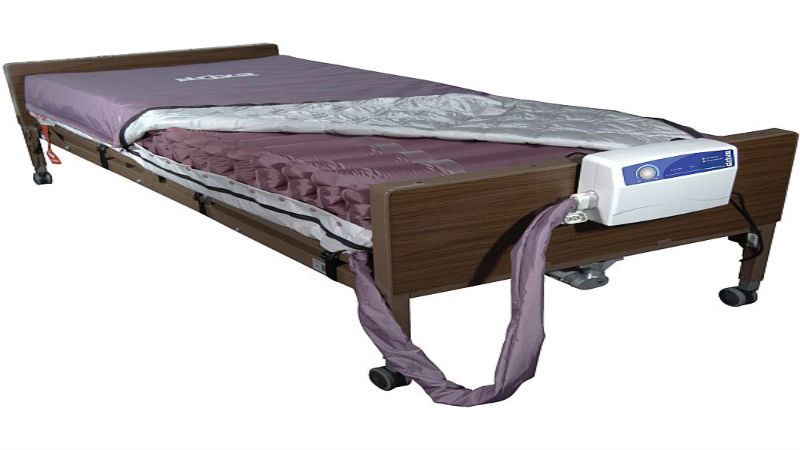
It is often a battle to reduce the negative impact on the skin of lying in bed. In an attempt to improve the result, medical facilities and caring individuals are turning to various pressure management products. While some such as gel-filled mattresses are definitely low-tech, others, such as the low air loss mattress is a more active or high-tech solution.
What Is a Low Air or Air Loss (Air Flow) Mattress?
A bed with this type of mattress is designed in such a way as to pump air throughout the mattress. The various air chambers work together by inflating and deflating to ensure pressure constantly changes, and the skin remains dry and cool, therefore, helping to prevent skin-related health issues. Some of the mattresses actually feature an alternating pressure device. This adds an additional benefit for those who suffer from chronic back pain. While several brands of low air loss mattress models are currently available, they all function with this purpose in mind.
Best Candidates
Candidates for this type of mattress generally suffer from actually or a risk for bed sores/pressure ulcers. Typically, many are immobile. As such, they are not capable of turning with ease or without help. They may not be easily capable of repositioning themselves. Generally, those who are the best candidates for this type of mattress are:
* Paraplegics or quadriplegics
* Those hospitalized – particularly those in intensive care;
* People in comas
* The terminally ill
* Individuals recovering from surgery
Such people will benefit the most from having low air loss mattresses.
The Low Air Loss Mattress
If you are planning to take care of someone with fragile skin – someone who will be susceptible to the development of bedsores, consider the low air mattress to be one of the best options possible. They provide a highly viable defense against the soreness, pain, and suffering that lying confined to bed is capable of causing.