Lasers or lenses?
There are two common types of corrective eye surgery — laser eye surgery and lens implants. Both procedures treat vision problems, but it is helpful to know your options before considering which one is best for you.
Eye operations are the most common type of surgery performed in the United States. As a result, experts are conducting ongoing research and development into techniques, products, and surgical methods for the treatment of a variety of visual ailments.
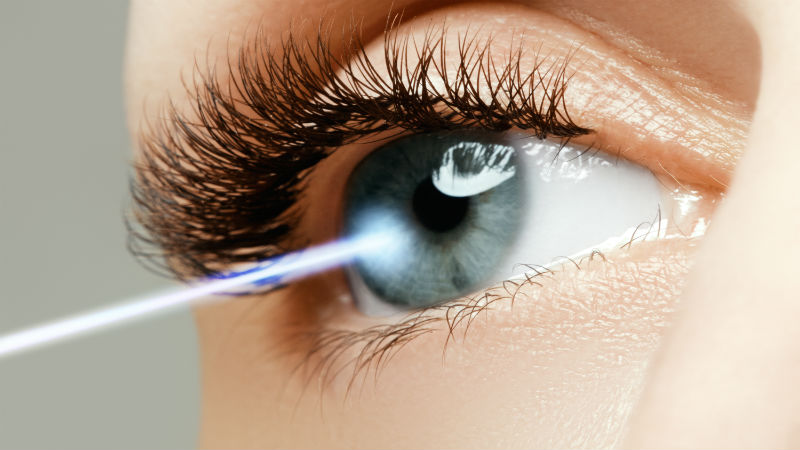
A common corrective procedure is LASIK eye surgery, which stands for laser in-situ keratomileusis. LASIK can correct vision problems such as nearsightedness, farsightedness, and astigmatism.
There are several online tests you can take to find out if you qualify for LASIK surgery. Other laser surgery techniques include small-incision lenticule extraction (SMILE) and surface laser treatments like photorefractive keratectomy (PRK).
A lens implant is another option to restore the vision of individuals with cataracts or patients with poor eyesight who either don’t want or don’t qualify for laser eye surgery.
When cataracts form in the eye; the natural lens become cloudy and distorted. The individual no longer see vivid colors, and their vision become hazier over time. An eye surgeon can remove the eye’s natural lens and replace it with a synthetic lens implant, restoring clarity and color perception for the patient.
There are several different types of lens surgery. These include refractive lens exchange (RLE), where your lens is replaced with an implant, and Phakic IOL (PIOL), when the surgeon places an artificial lens into your eye without removing the natural one.
The right choice for your eyes
Laser eye surgery and lens implants are safe, effective, common, and popular procedures. Both achieve similar results and complications are rare. However, laser eye surgery is less invasive and perfectly suitable for most patients.
You may not qualify for laser eye surgery if you have a very high prescription or severe astigmatism. In this case, lens implants are your option to seeing clearly without glasses or contact lenses. Additionally, if you are of an age where you are likely to develop cataracts, your eye surgeon may recommend lens implants over laser surgery.
The best type of eye surgery for you will vary depending on your specific case. Finding a reputable surgeon and consulting them for advice is a significant first step. Research online resources and get an opinion of an experienced doctor to help you to make a confident, informed decision.