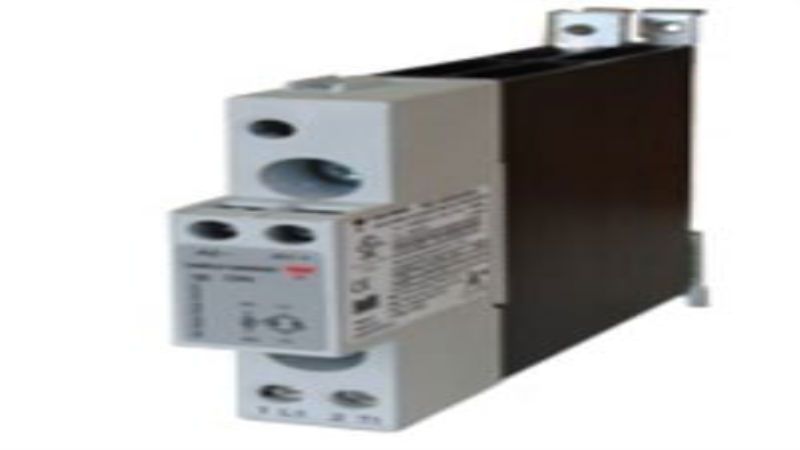
A Carlo Gavazzi solid-state relay, or SSR is capable of performing a number of the same tasks as an electromechanical relay, or EMR. The primary difference between these two relays is that the solid-state relay does not feature any moving mechanical parts. In actual fact, it is simply an electronic device that needs optical, magnetic and electrical semiconductors and electrical components to perform the isolation and relay switching operation.
Understanding Operation
Both the EMR and the SSR use a separate circuit and control circuit to switch a load. Applying voltage to the Carlo Gavazzi SSR input will energize the relay with a light emitting diode, or LED. The light from the LED is shined onto a semiconductor that is sensitive to light.
If there is a zero-voltage crossover relay, the control circuit is conditioned on the output switch at the subsequent zero-voltage crossover. For a relay that is not zero-voltage, at the precise time the voltage occurs, the output solid-state switch is activated.
Removing the input power with disable the control circuit. When a load current passes its cycle’s zero point, the solid-state switch is deactivated.
The Benefits of Solid-State Relay
When the Carlos Gavazzi solid-state relay is used properly in the intentional application, it will offer a number of the characteristics that you may not find in the electromechanical relay. It features a high degree of reliability and significantly reduces electromagnetic interference.
In addition to being highly resistant to vibration and responding quickly, the SSR also has a long service life. It does not have any moving parts that are going to wear out over time. The solid-state relay also does not have arching contacts that often lead to EMR failure.
Switching Devices
The thyristor semiconductors are made up of a number of incredibly useful devices. The most commonly used of these semiconductors are the metal-oxide semiconductor field effect transistor, or MOSFET, alternistor, triac and silicon-controlled rectifiers. In several of these applications, key functions are performed by these devices. It is important that you are aware of their shortcomings just as you are with the advantages. It is also necessary to correctly specify a reliable system. When used correctly in the intended applications, this type of device can provide an incredible advantage in speed, reliability and meeting other environmental requirements that are just not something that you are going to get with the electromechanical relays.