Summary first:
- Chimney damage in Chicago often starts at the crown, cap, or mortar joints and worsens fast once water gets into the brick.
- Repairs typically involve tuckpointing, flue liner inspection, crown reconstruction, and correcting the root cause of movement, not just patching the surface.
- Property owners searching for chimney repair Lakeview in Chicago, IL should look for contractors who match original materials and address structural causes, not only cosmetic symptoms.
Chicago chimneys take a beating from freeze-thaw cycles, wind-driven rain, and decades of flue gas exposure, which means small cracks rarely stay small for long. A missing mortar joint or a hairline crack in the crown can let water into the chimney structure within a single winter season, turning a minor repair into a rebuild.
Homeowners researching Chimney Repair in Lakeview Chicago, IL are usually trying to catch this kind of damage early, before it reaches the attic or interior walls. Chimneys face some of the most extreme structural stress on a building because they combine thermal expansion, corrosive flue gases, and constant exposure to the elements from the rooftop down to the water table.
Why Chimney Damage Spreads So Quickly
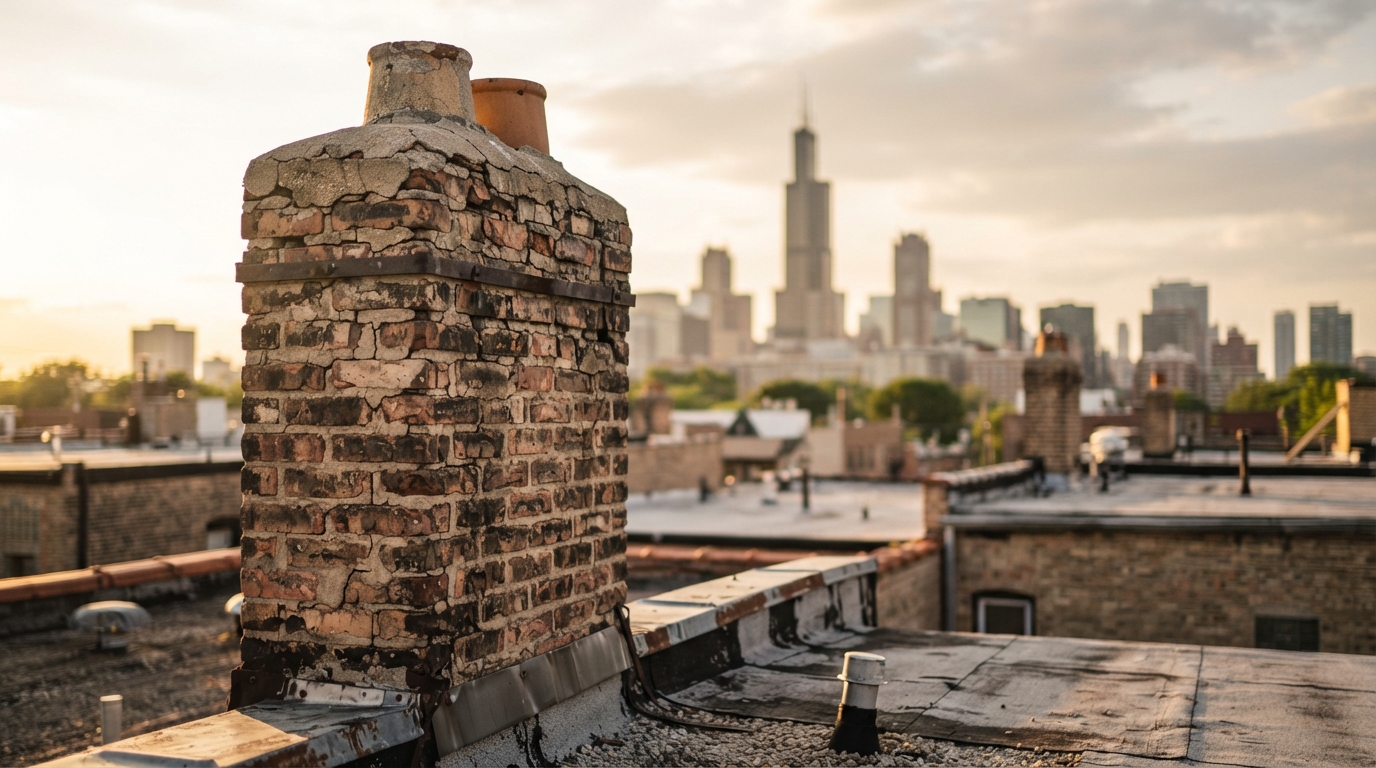
Chimneys sit above the roofline, exposed on all sides, which makes them the first part of a structure to show wear. Once water finds a way into brick or mortar, the freeze-thaw cycle common to Chicago winters accelerates the breakdown from the inside out.
Common early warning signs include:
- Cracked or spalling brick near the top courses
- Gaps or crumbling mortar joints around the chimney base or crown
- A cracked or deteriorated chimney crown allowing water to enter from above
- Rust staining or streaking, which often signals corroded internal steel components
- Visible movement or leaning near the chimney’s connection to the roofline
Left unaddressed, these symptoms typically escalate into major structural failures that compromise the safety of the property.
What a Thorough Chimney Repair Actually Involves
Effective chimney repair is not a single task. It usually requires evaluating several interconnected components to determine where water or heat is compromising the structure.
- Mortar joint inspection and repointing to stop water infiltration at the source, since repointing is the structural repair of failing mortar rather than a cosmetic fix.
- Crown reconstruction, often involving reinforced, overhanging concrete crowns designed to shed water away from the masonry face.
- Flue liner and smoke chamber evaluation, which involves inspecting and restoring clay tile liners and parging smoke chambers so gases and heat vent safely.
- Structural steel correction, addressing “rust-jacking” by replacing corroded steel with primed components and proper flashing.
The Chimney Safety Institute of America recommends annual inspection for actively used chimneys, which helps catch these issues before a full season of freeze-thaw damage takes hold, according to guidance referenced by industry sources such as the National Fire Protection Association. This kind of routine check is especially relevant in older Chicago neighborhoods where masonry chimneys predate modern building codes.
Repair Approaches: A Quick Comparison
| Approach | Best For | Typical Scope |
| Spot repointing | Isolated mortar joint failure | Grinding out and replacing failing joints |
| Crown repair or replacement | Water entering from the top | Rebuilding the concrete cap to shed water |
| Flue liner restoration | Interior heat or gas venting issues | Inspecting and parging the smoke chamber |
| Full chimney rebuild | Advanced structural deterioration | Reconstruction from the roofline up |
Choosing the right approach depends on how far the damage has progressed and whether the root cause, such as failing steel or foundation settlement, has been identified rather than just the visible symptom.
Matching Materials to the Original Structure
A repair that looks correct but uses incompatible mortar can fail within a few seasons. Evaluating the existing masonry to match the strength, density, and breathability of the original wall helps new mortar perform the way older Chicago brick and stone were designed to perform. This is particularly important on pre-1900s homes and greystones where original materials differ significantly from modern mixes.
Frequently Asked Questions
How do I know if my chimney needs repair instead of a rebuild? Common signs such as crumbling mortar, cracked brick, loose masonry, or visible movement usually call for an inspection first, since the extent of deterioration determines whether spot repair or reconstruction is appropriate.
What causes most chimney damage in Chicago? Water infiltration combined with freeze-thaw cycles is the leading cause, often starting at the crown or mortar joints before spreading to the flue liner and interior structure.
Is tuckpointing the same as repointing a chimney? No. Repointing addresses structural mortar failure to stop water intrusion, while tuckpointing is a decorative finishing technique, though both terms are often used interchangeably by homeowners.
How often should a chimney be inspected? Annual inspection is recommended for chimneys in regular use, with a structural look every few years for decorative or decommissioned chimneys.
Next Steps for Chimney Care
Heritage Masonry provides restoration services for residential, commercial, and institutional properties across the Chicago area, focusing on material matching and root-cause repairs rather than temporary patches. Property owners weighing options for Masonry Repair Contractors Lakeview Chicago IL can review Masonry Repair Contractors in Lakeview Chicago, IL to compare tuckpointing, chimney restoration, and structural repair approaches before scheduling an inspection. For a closer look at how a local restoration team approaches chimney and foundation work, Heritage Masonry profiles its project history and service details, offering a useful starting point for planning a timely repair before minor damage becomes a larger structural concern.